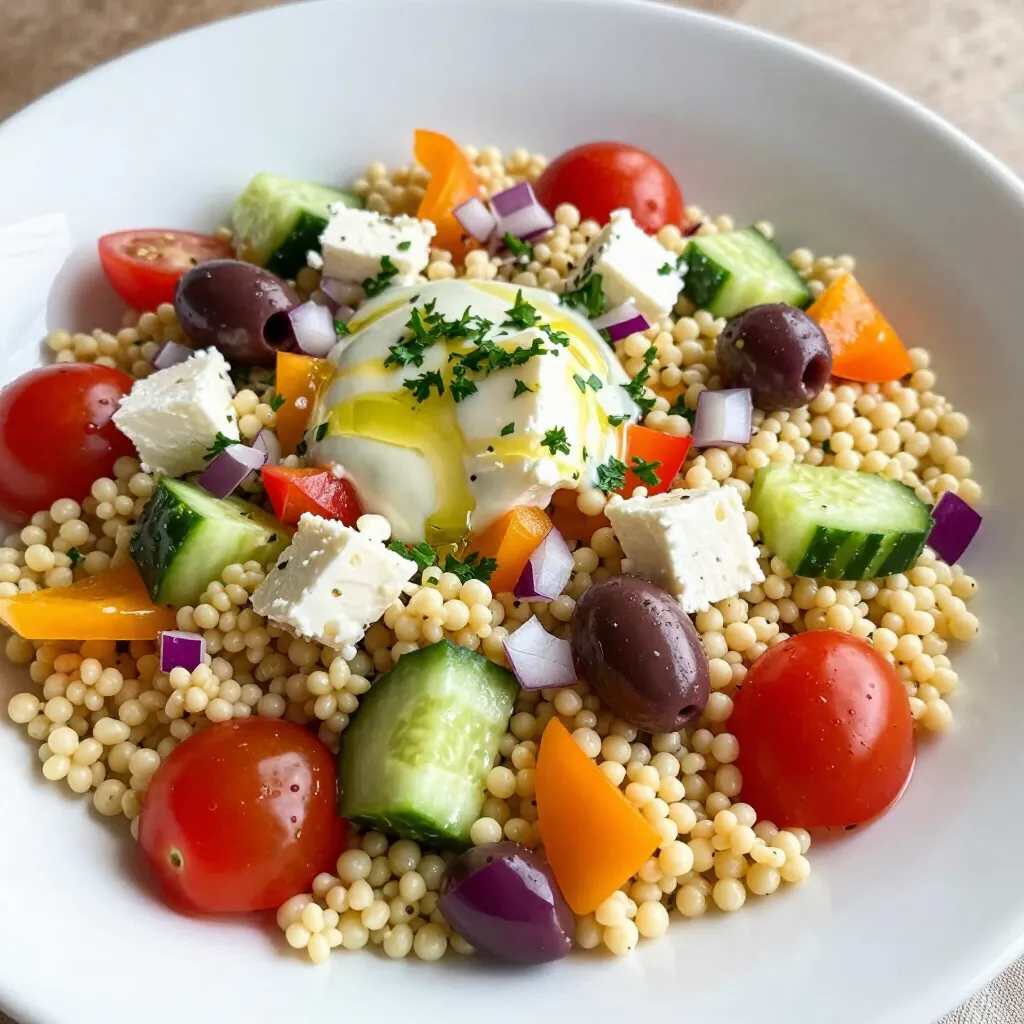
Looking for a fresh and tasty dish that’s easy to make? I’ve got just the recipe for you! My Israeli Couscous Greek Salad is not only vibrant, but it also bursts with flavor. This dish combines simple ingredients to create a meal that is healthy and satisfying. Whether you’re hosting a barbecue or enjoying a quiet dinner, this salad is a perfect choice. Let’s dive into how you can make it!
Why I Love This Recipe
- Fresh Ingredients: This salad is packed with vibrant, fresh vegetables that add color and crunch to every bite.
- Nutty Couscous: The Israeli couscous provides a delightful chewy texture that pairs perfectly with the crisp veggies.
- Versatile Dish: This salad can be served as a main dish or a side, making it perfect for any occasion.
- Quick and Easy: With minimal prep time, this recipe is ideal for busy weeknights or last-minute gatherings.
Ingredients
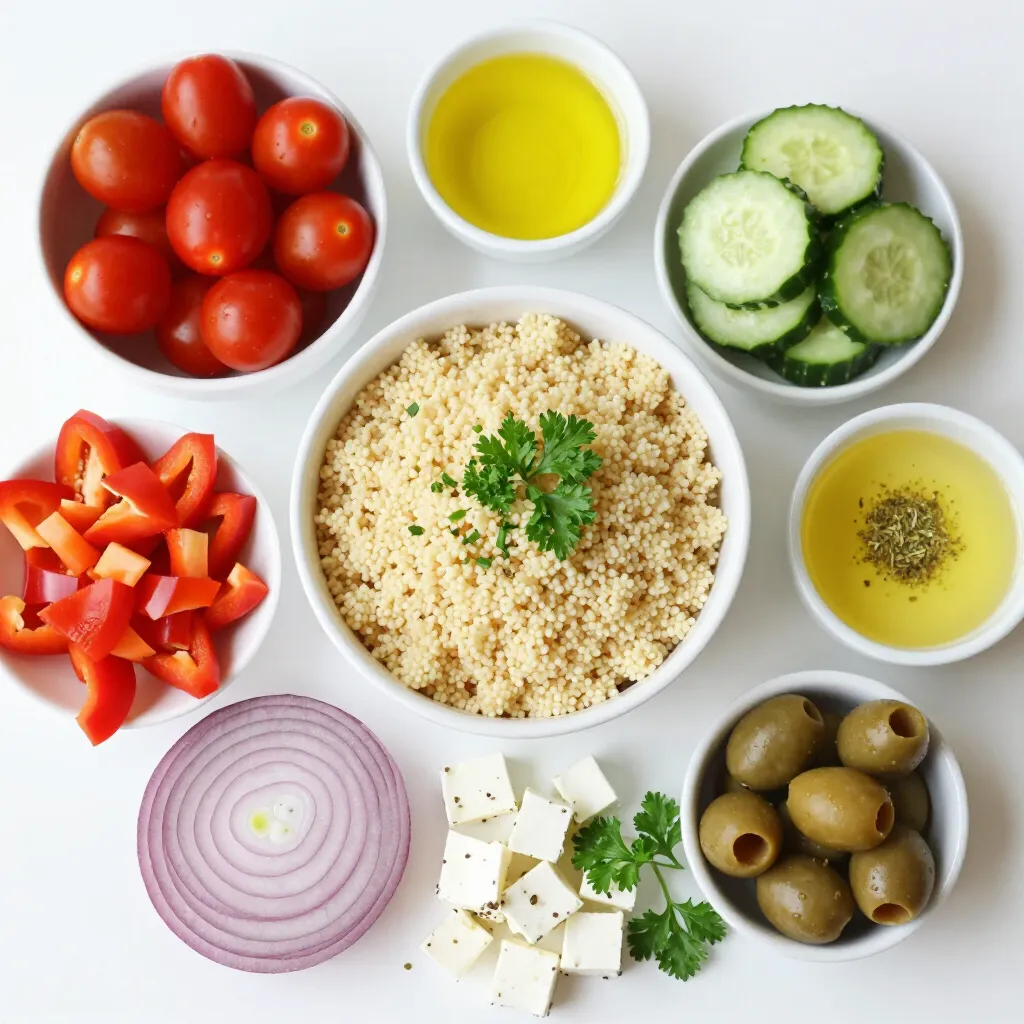
List of Ingredients
– 1 cup Israeli couscous
– 2 cups vegetable broth
– 1 cup cherry tomatoes, halved
– 1 cucumber, diced
– 1 bell pepper (any color), diced
– 1/2 red onion, finely chopped
– 3/4 cup feta cheese, crumbled
– 1/2 cup Kalamata olives, pitted and halved
– 1/4 cup fresh parsley, chopped
– 3 tablespoons olive oil
– 2 tablespoons lemon juice
– 1 teaspoon dried oregano
– Salt and pepper to taste
Measurement Conversion Tips
When you cook, you might need to change measurements. Here are some tips:
– 1 cup equals about 240 milliliters.
– 1 tablespoon equals about 15 milliliters.
– 1 teaspoon equals about 5 milliliters.
– For dry ingredients, remember that 1 cup of couscous weighs around 200 grams.
Suggested Quality Ingredients
Using good ingredients makes your dish taste great. Here are my picks:
– For couscous, choose whole grain for more fiber.
– Use low-sodium vegetable broth to control salt.
– Choose fresh, ripe cherry tomatoes for sweetness.
– Buy good feta cheese for a creamy texture.
– Look for Kalamata olives that are firm and flavorful.
Now you have everything needed to create a fresh and tasty Israeli couscous Greek salad!
Step-by-Step Instructions
Preparing the Couscous
To start, grab a medium saucepan. Pour in 2 cups of vegetable broth. Bring the broth to a boil over medium heat. Once it boils, add 1 cup of Israeli couscous. Stir it gently, then lower the heat. Cover the pan and let it simmer for about 10 minutes. The couscous will soak up the broth and become tender. After 10 minutes, take it off the heat. Let it cool in the pan for a few minutes before moving it to a bowl.
Mixing the Salad Ingredients
Next, get a large bowl. In this bowl, add the halved cherry tomatoes, diced cucumber, diced bell pepper, and finely chopped red onion. Don’t forget 1/2 cup of Kalamata olives and 1/4 cup of fresh parsley. These ingredients bring color and taste. They work together to make the salad fresh and vibrant. Once everything is in the bowl, mix it gently with a spoon.
Whisking the Dressing
Now, let’s make the dressing. Take a small bowl and add 3 tablespoons of olive oil. Next, add 2 tablespoons of lemon juice and 1 teaspoon of dried oregano. Add a pinch of salt and pepper for flavor. Use a whisk to mix everything until it’s smooth. This dressing will tie the salad together. Pour it over the salad mixture and add the cooled couscous. Toss everything gently but well. Finally, fold in the crumbled feta cheese. This adds a creamy touch. Taste the salad and adjust the seasoning if you need to.
Tips & Tricks
How to Store Leftovers
To keep your Israeli couscous Greek salad fresh, store it in an airtight container. Place the salad in the fridge. This way, it can last for about three days. When you’re ready to eat it, give it a good stir. The flavors will mix again. If you notice excess liquid, don’t worry! Just drain it before serving. You can also add a splash of olive oil or lemon juice to freshen it up.
Enhancing Flavor Profiles
To make your salad even tastier, think about adding some extra herbs. Fresh dill or mint can bring a burst of flavor. You can also toss in some red pepper flakes for a little heat. If you like it a bit sweeter, add diced bell peppers or a drizzle of honey. Don’t be shy! Feel free to play around with the dressing. Try adding balsamic vinegar or a touch of mustard. Small changes can create big flavors.
Presentation Tips for Serving
Presentation matters when you serve your salad. Use a large, shallow bowl to show off the vibrant colors. Garnish with extra parsley and a few Kalamata olives on top. This adds a pop of color and makes it look fancy. You can also serve it with warm pita bread on the side. This makes it a full meal and adds to the experience. A beautiful dish will impress your guests and make them excited to dig in!
Pro Tips
- Cook Couscous Perfectly: Make sure to watch the couscous closely while cooking to avoid overcooking it. It should be al dente, with a slight bite.
- Customize Your Veggies: Feel free to add or substitute other vegetables such as zucchini, bell peppers, or radishes according to your preference or what’s in season.
- Feta Cheese Variations: Experiment with different types of feta, such as herbed or smoked feta, to add a unique flavor twist to your salad.
- Make It Ahead: This salad can be made ahead of time and stored in the fridge. Just add the feta cheese right before serving to keep it fresh.
Variations
Vegetarian and Vegan Options
You can easily make this salad vegetarian or vegan. Simply skip the feta cheese. You can add extra veggies like artichokes or zucchini. These add great texture and flavor. You can also use avocado for creaminess. This keeps the dish fresh while making it filling.
Adding Protein Sources
To boost protein, add chickpeas or white beans. These legumes mix well with the other ingredients. They offer a nice creamy taste. Grilled chicken or shrimp also work well for meat lovers. Just make sure they are cooked and diced before mixing. This way, you enhance the salad without losing its charm.
Seasonal Variations
Change the veggies based on the season. In summer, use ripe peaches or nectarines. They add sweetness and color. In fall, roasted butternut squash brings warmth. You can also throw in some spinach or kale for extra greens. These tweaks keep your dish exciting and fresh all year round.
Nutritional Information
Overview of Key Nutrients
This salad is full of key nutrients. Each serving offers a good mix of vitamins and minerals. You get healthy carbs from Israeli couscous. The fresh veggies add fiber, which helps digestion. Feta cheese brings calcium for strong bones. Olive oil provides healthy fats that are good for your heart. This salad is not just tasty but also nutritious.
Health Benefits of Ingredients
Each ingredient in this salad has its own health perks:
– Israeli Couscous: This grain is a source of energy. It helps fill you up without too many calories.
– Cherry Tomatoes: They are high in vitamins A and C. These vitamins support your immune system.
– Cucumber: This veggie is very hydrating. It helps keep you cool and refreshed.
– Bell Pepper: Rich in antioxidants, bell peppers help fight free radicals in your body.
– Red Onion: This adds flavor and has anti-inflammatory properties.
– Feta Cheese: It offers protein and calcium while being lower in fat than other cheeses.
– Kalamata Olives: These are packed with healthy fats and may lower heart disease risk.
– Olive Oil: Known for its heart benefits, it also helps with cholesterol levels.
– Lemon Juice: This brightens the dish and boosts vitamin C intake.
– Fresh Parsley: A great source of vitamins K and C, parsley adds a fresh taste.
Serving Size Recommendations
One serving is about one-fourth of the salad. This gives you a nice balance of flavors and nutrients. I recommend serving this salad as a side dish or a light meal. It works well for lunch or dinner. You can even enjoy it as a healthy snack. For best results, pair it with whole-grain pita bread. This adds more fiber and makes the meal more filling.
FAQs
Can I use regular couscous instead of Israeli couscous?
Yes, you can use regular couscous. However, the texture will change. Israeli couscous is larger and chewier. Regular couscous cooks faster and is finer. This salad benefits from the hearty bite of Israeli couscous. If you use regular, adjust the cooking time.
How long can I store the salad in the fridge?
You can store the salad in the fridge for up to three days. Keep it in an airtight container. The flavors will blend and deepen over time. However, the vegetables may lose some crispness. To enjoy it fresh, eat it within two days.
What can I substitute for feta cheese?
If you need a substitute for feta, try goat cheese or ricotta. Both give a creamy texture. You can also use vegan cheese if you want a dairy-free option. For a different flavor, try avocado. It adds creaminess without cheese.
This blog post covered how to create a vibrant couscous salad. You learned about key ingredients, measurement tips, and the best quality options. I provided clear steps for preparation, mixing, and dressing.
You also found tips for storage, flavor enhancements, and eye-catching presentations. I shared variations to suit different diets and seasonal availability, along with important nutritional details.
In conclusion, this salad is versatile and packed with nutrients. Experiment and enjoy this healthy dish with friends and famil